Showing posts with label teesside. Show all posts
Showing posts with label teesside. Show all posts
Thursday, 23 May 2013

Thursday, 9 May 2013


Saturday, 30 March 2013
Stealth Covering
Finally getting to the exterior proper
Here's the stealth covering for the top of the ship
There will be gaps made for the protruding sensory equipment and hatches


Thursday, 21 March 2013
Populating the Anderson
Here I have started populating the ship's rooms with assets; chairs, servers, airlocks, doors, beds, wardrobes transformers, inverters, the battery bank, circuit breakers and escape pod hatches.


Friday, 15 February 2013
Assets

Airlocks

Crew Chair

Bridge Desk

Doors
(Side)

(Front)

Enclosed Transformer
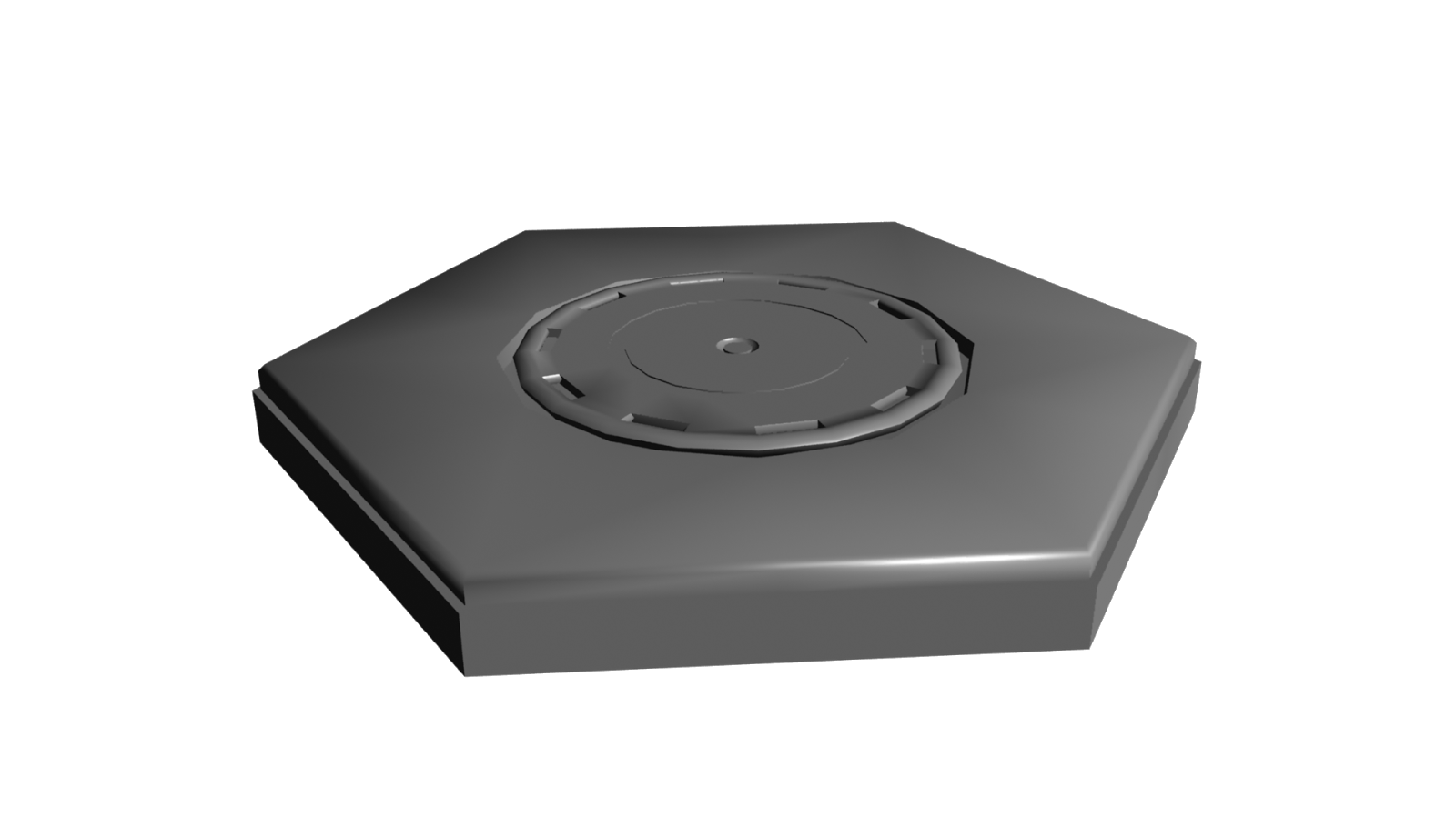
Escape Pod Hatch

Nuclear Thruster
(Exterior)

(Interior)

(Bottom)
 (with Landing Gear)
 (with Arm)


Server
 Stackable Kitchen Chair
Wardrobe


Nuclear Reactor
Nuclear Reactor
Thursday, 7 February 2013
Changes and Reasons
One of my initial concerns was how to provide the medical care safely and easily. Another was to provide the passengers aboard the ship a comfortable and not-too-unsettling journey. The obvious answer was gravity.
Unfortunately providing gravity in a space environment is usually expensive, in resources, space and energy. The most developed method is to use a torus structure spinning at high velocity, causing the contents to be forced against the outer surface. Providing one of these large enough without encumbering the ship or providing discomfort to the passengers moving in and around it would have been counter-productive.
Therefore I have removed the outer ring from my design, instead opting for a more radical approach. Extrapolating on current research (http://arxiv.org/ftp/gr-qc/papers/0203/0203033.pdf), I have chosen gravitoelectromagnetism through super-conductors as my source of the force. This is where I have chosen to take artistic liberties with the ship, but I will provide ample space for the housing for such technology and its source of power. I will also have to create a safe environment should the system lose power.
I have also reduced the amount of floor space needed for the rescue equipment, as continued work on plans has revealed I had overestimated the space required.
The large port and starboard engines have been removed, as I have increased the number of VTOL capable engines, which are integrated into the landing gear. This will allow the ship's weight to be more evenly spread and provide more responsive and agile flight, as well as increased stability should the front section need to be detached.
Unfortunately providing gravity in a space environment is usually expensive, in resources, space and energy. The most developed method is to use a torus structure spinning at high velocity, causing the contents to be forced against the outer surface. Providing one of these large enough without encumbering the ship or providing discomfort to the passengers moving in and around it would have been counter-productive.
Therefore I have removed the outer ring from my design, instead opting for a more radical approach. Extrapolating on current research (http://arxiv.org/ftp/gr-qc/papers/0203/0203033.pdf), I have chosen gravitoelectromagnetism through super-conductors as my source of the force. This is where I have chosen to take artistic liberties with the ship, but I will provide ample space for the housing for such technology and its source of power. I will also have to create a safe environment should the system lose power.
I have also reduced the amount of floor space needed for the rescue equipment, as continued work on plans has revealed I had overestimated the space required.
The large port and starboard engines have been removed, as I have increased the number of VTOL capable engines, which are integrated into the landing gear. This will allow the ship's weight to be more evenly spread and provide more responsive and agile flight, as well as increased stability should the front section need to be detached.
Tuesday, 22 January 2013


Monday, 21 January 2013
Detailed Floor Layout (Near Complete)


Draft Layout Designs

This much smaller scaled version had similar features to the latest design, but lacked the organisation and safety considerations of the later layout. It also lacked a main engine and adequate space for rescue equipment and supplies as well as life support systems.
Key
Red - Bridge
Blue - Communications
Cyan - Navigation
Light Green - Systems
Green - Medical
Green Striped - Wards
Grey - Crew Quarters
Black - Evacuee Quarters
Purple - Engineering
Yellow - Landing Gear/Engine Control


This design was separated into decks and included all the needed features, but did little to account for the close proximity of the crew and passengers to the engines.
Key
Red - Bridge
Blue - Communications
Cyan - Navigation
Light Green - Systems
Green - Medical
Green Dotted - Wards
Green Striped - E.R
Grey - Crew Quarters
Black - Evacuee Quarters
White - Water/Oxygen
Light Grey - Shuttle Bays
Orange - Rescue Equipment
Purple - Engineering
Thursday, 10 January 2013
Interior Floor Layout

I have colour coded the rooms and I am now populating the ship with its equipment:
Red - Bridge
Cyan - Navigation
Blue - Communications
Light Green - Systems
Green - Medical
Dark Grey - Crew Quarters
Grey - Passenger Quarters
White - Life Support (Air and Water)
Dark Orange - Kitchen and Living space
Orange - Equipment Storage
Purple - Engineering
Thursday, 27 December 2012
Initial FMP Mind-Maps and Designs
These are my (somewhat messy) initial designs and plans for the project.
This mind-map shows every area of the spacecraft I have considered, with the branches leading to possible features for each of the parts or rooms.


 Above is a quick first design for the ATVs the crew could take closer to rescue sites. These would be extremely tough, so as to survive most anything nature might throw at it.
This mind-map shows every area of the spacecraft I have considered, with the branches leading to possible features for each of the parts or rooms.

As you can see at the very bottom, it reads "[Thunderbirds]". As I was asking for advise for this mind-map, I was reminded of the awesome television show I watched so fondly as a child, and I felt such a fool for not remembering it, or mentioning it in my specification.
The shows visionary creator Gerry Anderson died on Boxing Day.
I always intended to name the ship in his honour from as soon as I was reminded, but with this news I felt compelled to dedicate this project to his memory. The ship's name will be Anderson IR (Interplanetary Rescue).
Above is the initial layout of the ship's bridge. I have taken much inspiration from the bridges of the Star Trek franchise. I chose this layout as it would be both familiar to the audience and practical. The captain, slightly raised on a central platform, can receive information from as many directions as possible (the light arrows show roughly the flow of information).
As you can see, I have used a hexagonal shape to maximise efficiency and strength. The rest of the ship will be designed around this, creating a honeycomb of rooms (unless they become redundant, like perhaps in corridors).

This was my initial ship layout, based on the hexagonal design.
As you can see from my notes, I thought the essential systems (communications, navigation, life support and the evacuee quarters, along with the bridge) should be more central, or at least be more localised, so as to be further from engineering (and the ship's engines) so they would perhaps be able to detach if there was any problems with the engines, thus preserving life (as that is the ship's purpose).

At the very top of the basic initial layout I have noted "think in decks". Above is my first rough attempt to do so, but as you can see I was as yet unable to significantly separate the vital systems and the engines.

This was a quick sketch where I seemed to solve the problem of separating the aforementioned systems. I finally realised this is why Star Trek's Enterprise had been designed with its long 'neck', as it separated the main decks from the engineering decks, and furthermore the engines themselves.
You can also see the (unrealistically large) landing gear on each corner.

Here are my design sketches for the ship's landing gear. I started by designing the 'feet', making them as adjustable as possible, allowing the craft to land on varied and uneven terrain.
I added the treads (with their own adjustable suspension) so that two 'toes' would be able to lift slightly and automatically move each 'foot' should the landing surface become unstable. This would also allow the ship to crawl along, enabling it to approach rescue sites without taking off.
I added engines onto the legs so it would be VTOL capable, allowing for swifter approaches and departures in hot zones and negating the need for substantial wings.
Above was my first design for the ship's communications tower, with antenna on top for long-range radio transmissions and a large dish for satellite communications.
However, whilst conducting research into the area I found (as noted) that a hollow glass tube would do the job whilst staying radar invisible. This could be extended and retracted as needed to avoid damage.

These are my designs for the spacecraft's defences. Mainly automated and designed to be non-lethal, the system would track incoming missiles and, depending on the range and speed of the incoming target, fire either a long range rocket or deploy flares.
Since these sketches I have added a railgun system for the rockets' initial propulsion and firing on closer targets.
 Above is a quick first design for the ATVs the crew could take closer to rescue sites. These would be extremely tough, so as to survive most anything nature might throw at it.
I think I may deviate from this 'all-in-one' design and go various vehicles capable of different tasks.
Thursday, 13 December 2012
Some Useful Links... (or at least that I've found interesting)
http://www.nasa.gov/exploration/home/index.html
http://www.nasa.gov/topics/technology/index.html
http://en.wikipedia.org/wiki/Spacecraft_design
http://en.wikipedia.org/wiki/Radar_cross-section
http://en.wikipedia.org/wiki/Radar-absorbent_material
http://en.wikipedia.org/wiki/Stealth_technology
http://en.wikipedia.org/wiki/Flak
http://en.wikipedia.org/wiki/Goalkeeper_CIWS
http://en.wikipedia.org/wiki/Rolling_Airframe_Missile
http://en.wikipedia.org/wiki/Kashtan_CIWS
http://www.darkgovernment.com/news/missile-shield-relocated-to-israel/
http://en.wikipedia.org/wiki/Missile_guidance
http://en.wikipedia.org/wiki/Missile_defense
http://en.wikipedia.org/wiki/Strategic_Defense_Initiative
http://en.wikipedia.org/wiki/Tactical_High_Energy_Laser
http://en.wikipedia.org/wiki/Brilliant_Pebbles
http://en.wikipedia.org/wiki/Anti-satellite_weapon
http://en.wikipedia.org/wiki/Railgun
http://en.wikipedia.org/wiki/Electronic_countermeasures
http://en.wikipedia.org/wiki/HMX
http://thinkingbeyond-curiosity.blogspot.co.uk/2010/12/stealth-aircraft-one-of-deadliest.html
http://www.aviationweek.com/topicsevents/Innovation.aspx
http://www.aviationweek.com/Blogs.aspx?plckBlogId=Blog:27ec4a53-dcc8-42d0-bd3a-01329aef79a7&plckController=Blog&plckScript=blogScript&plckElementId=blogDest&plckBlogPage=BlogViewPost&plckPostId=Blog%253A27ec4a53-dcc8-42d0-bd3a-01329aef79a7Post%253Ac61d80df-a87d-4909-8ae9-5b80e3609ae1
http://www.projectrho.com/public_html/rocket/deckplans.php
http://www.lr.tudelft.nl/en/organisation/departments-and-chairs/space-engineering/space-systems-engineering/expertise-areas/space-propulsion/design-data/size-estimation/
http://www.eurenco.com/en/high_explosives/new_energetic.html
http://www.denofgeek.com/movies/286589/top_75_spaceships_in_movies_and_tv.html
http://arxiv.org/ftp/gr-qc/papers/0203/0203033.pdf
http://en.wikipedia.org/wiki/Gravitoelectromagnetism
http://www.relativitybook.com/resources/gravitomagnetism.html
http://www.cygnus-x1.net/links/lcars/starfleet-vessel-enterprise-nx-01.php
http://ntrs.nasa.gov/archive/nasa/casi.ntrs.nasa.gov/19910023479_1991023479.pdf
http://www.nasa.gov/centers/glenn/technology/index.html
http://www.space.com/8141-nasa-test-medical-device-sick-astronauts-space.html
http://nasamedicalsupply.com/index.html
http://singularityhub.com/2009/06/08/growing-organs-in-the-lab/
http://en.wikipedia.org/wiki/ICAN-II
http://www.engr.psu.edu/antimatter/introduction.html
http://en.wikipedia.org/wiki/ISS_ECLSS
http://www.nasa.gov/centers/marshall/pdf/104840main_eclss.pdf
http://mix.msfc.nasa.gov/
http://suzymchale.com/ruspace/indexiss.html
http://ntrs.nasa.gov/archive/nasa/casi.ntrs.nasa.gov/20050092399_2005093339.pdf
http://en.wikipedia.org/wiki/Cyanobacteria
http://www.nasa.gov/topics/technology/index.html
http://en.wikipedia.org/wiki/Spacecraft_design
http://en.wikipedia.org/wiki/Radar_cross-section
http://en.wikipedia.org/wiki/Radar-absorbent_material
http://en.wikipedia.org/wiki/Stealth_technology
http://en.wikipedia.org/wiki/Flak
http://en.wikipedia.org/wiki/Goalkeeper_CIWS
http://en.wikipedia.org/wiki/Rolling_Airframe_Missile
http://en.wikipedia.org/wiki/Kashtan_CIWS
http://www.darkgovernment.com/news/missile-shield-relocated-to-israel/
http://en.wikipedia.org/wiki/Missile_guidance
http://en.wikipedia.org/wiki/Missile_defense
http://en.wikipedia.org/wiki/Strategic_Defense_Initiative
http://en.wikipedia.org/wiki/Tactical_High_Energy_Laser
http://en.wikipedia.org/wiki/Brilliant_Pebbles
http://en.wikipedia.org/wiki/Anti-satellite_weapon
http://en.wikipedia.org/wiki/Railgun
http://en.wikipedia.org/wiki/Electronic_countermeasures
http://en.wikipedia.org/wiki/HMX
http://thinkingbeyond-curiosity.blogspot.co.uk/2010/12/stealth-aircraft-one-of-deadliest.html
http://www.aviationweek.com/topicsevents/Innovation.aspx
http://www.aviationweek.com/Blogs.aspx?plckBlogId=Blog:27ec4a53-dcc8-42d0-bd3a-01329aef79a7&plckController=Blog&plckScript=blogScript&plckElementId=blogDest&plckBlogPage=BlogViewPost&plckPostId=Blog%253A27ec4a53-dcc8-42d0-bd3a-01329aef79a7Post%253Ac61d80df-a87d-4909-8ae9-5b80e3609ae1
http://www.projectrho.com/public_html/rocket/deckplans.php
http://www.lr.tudelft.nl/en/organisation/departments-and-chairs/space-engineering/space-systems-engineering/expertise-areas/space-propulsion/design-data/size-estimation/
http://www.eurenco.com/en/high_explosives/new_energetic.html
http://www.denofgeek.com/movies/286589/top_75_spaceships_in_movies_and_tv.html
http://arxiv.org/ftp/gr-qc/papers/0203/0203033.pdf
http://en.wikipedia.org/wiki/Gravitoelectromagnetism
http://www.relativitybook.com/resources/gravitomagnetism.html
http://www.cygnus-x1.net/links/lcars/starfleet-vessel-enterprise-nx-01.php
http://ntrs.nasa.gov/archive/nasa/casi.ntrs.nasa.gov/19910023479_1991023479.pdf
http://www.nasa.gov/centers/glenn/technology/index.html
http://www.space.com/8141-nasa-test-medical-device-sick-astronauts-space.html
http://nasamedicalsupply.com/index.html
http://singularityhub.com/2009/06/08/growing-organs-in-the-lab/
http://en.wikipedia.org/wiki/ICAN-II
http://www.engr.psu.edu/antimatter/introduction.html
http://en.wikipedia.org/wiki/ISS_ECLSS
http://www.nasa.gov/centers/marshall/pdf/104840main_eclss.pdf
http://mix.msfc.nasa.gov/
http://suzymchale.com/ruspace/indexiss.html
http://ntrs.nasa.gov/archive/nasa/casi.ntrs.nasa.gov/20050092399_2005093339.pdf
http://en.wikipedia.org/wiki/Cyanobacteria
Revised FMP Specification
Project Aim: To model futuristic technologies for a computer
generated spacecraft set, as if consulted by area specialists, as is common on
science fiction films.
There are many military and research spacecraft with popular science
fiction, but very few rescue or medical ships. The Star Wars franchise includes various medical and rescue ships,
including medical ship Redemption
where Luke Skywalker receives his robotic hand, and several fire service craft
seen after a crash landing on the planet Coruscant. Medical bays play a large
part in the Star Trek franchise and
Ridley Scott’s Prometheus, both
having larger numbers of crew aboard their key ships. However none of these are
really equipped to retrieve downed crew members or rescue those stranded in
environmental catastrophes, either on an international or interplanetary scale.
The spacecraft will therefore be designed with these areas as a
priority, with human safety and rescue capabilities put first in the dangerous environments
of both planets and space.
The research involved will cover many areas including current and
projected space, medical and rescue technologies.
With the recent advancements in both scientific and computer generation
technologies, there has been a recent resurgence in sci-fi films, many coming
as massive investments and profitable franchises. With green screen set
extensions now common-place and full digital sets becoming standard for film environments,
I believe developing the techniques to construct such sets in the computer will
give me an advantage in the field as they become normal practise.
Having assets like this allows visual effects teams to composite actors
or characters into the generated environment, but also provides a basis for
practical sets and pre-visualisations.
There has also been increased interest and research into environmental and
climate changes in recent years, with the concern they will bring about more
weather based disasters for the human population. This issue has increasingly
been used as the subject message for films, including science fiction. Therefore
I believe the presence of search and rescue teams and vehicles within these
films will increase as a result as filmmakers dream up more and more terrible
disasters for characters to endure.
This project will allow me to invest further in prop modelling and
environment design, two areas I have great interest in. I believe each aspect
of a visual effects asset should have a purpose and a reason for its existence,
rather than the sometimes purely aesthetic preference that often seems
illogical and impractical. Efficiency in the asset’s design will therefore be
paramount as well as keeping close to technology in use today or projected for
the future.
The areas of focus will be production design with visual effects
assets. Within the asset there will be models of equipment and structures
involved in medical treatment and recovery as well as search and rescue
technology, all in the context of space travel and living.
As the topics for research are quite wide and varied, I am unsure I
will complete all the research and modelling in certain areas.
Due to the heavy space based aspect of the asset, NASA and its
associates are obvious candidates for me to contact, with their lengthy and
focused research. Unfortunately due to the large distance to them, as well as
current budget cuts, they may be unable to provide ample assistance. They do
however have extensive online resources including possible applications of
technologies from science fiction. Results from research in this area may have
to be vastly extrapolated to fit the asset’s intended purpose (as is often the
case in science fiction) as no direct comparisons yet exist.
Medical advances and projected future innovations in the area are often
the subject of expertise in large universities. These should be far easier to
contact and will also have their research published in journals as well as
online. Unfortunately any current research is probably unlikely to be allowed
to be discussed or released.
Rescue technology should be quite easy to research with the amount of
footage compiled from incidents worldwide every day. This should allow research
into dealing with many different disasters that occur in multiple environments
across all continents. Disaster movies could also serve as good reference for
current technologies and techniques. Developing and future technologies in this
area would be harder to gather research on as much is often developed in
conjunction with other areas including the military, making it confidential.
Other experimental technology is often constructed under military
contracts and so would be harder to discuss or find evidence of. These include
stealth, armour and non-lethal weapons technologies that the spacecraft may
need to use in entering hostile environments.
The final assets I wish to create for this project are:
1.
A 3D spacecraft that can be used as both a
visual effects asset and a basis for practical sets; interior and exterior
2. A
user manual for said spacecraft including labelled cross-sections and
blueprints of the ship’s decks and systems
3.
A video of a fly-through showing the interior of
the ship with labels for systems similar to a HUD or AR system
Wednesday, 5 December 2012
Final Major Project Specification Draft
Project Aim: To model futuristic technologies for a computer generated spacecraft set, as if
consulted by area specialists, as is common on science fiction films.
There are many military and research spacecraft with popular science
fiction, but very few rescue or medical ships. Many ships have medical bays and
treatment facilities aboard, but few are equipped to retrieve downed crew
members or rescue those stranded in environmental catastrophes, either on an
international or interplanetary scale.
The design of the ship would therefore be designed with these areas as
a priority, with human safety and rescue capabilities put first in the
dangerous environment of space.
The research involved will cover many areas including current and
projected space, medical and rescue technologies.
Science fiction directors have used scientific consultants since the
dawn of the space age. There has been an increasing fascination with the genre
since, and has become one of the corner-stones of popular culture.
With the recent advancements in both scientific and computer generation
technologies, there has been a recent resurgence in sci-fi films, many coming
as massive investments and profitable franchises. With green scene set
extensions now common-place and full digital sets becoming standard for
environments, I believe developing the techniques to construct such sets in the
computer will soon become normal practise. Doing so will allow the visual
effects teams to composite actors or characters into the generated world, but
also provide a basis for practical sets and pre-visualisations that the
director can approve.
With the increased interest and research into environmental and climate
changes, with the concern they will bring about more weather based disasters for
the population, has increasingly been used as the subject of a basic message
for films, including science fiction. Therefore I believe the presence of search
and rescue teams and vehicles will also increase as a result.
This project will also allow me to invest far more in prop modelling
and environment design, two areas I have great interest in. I believe each
aspect of a visual effects asset should have a purpose and a reason for its
existence, rather than the sometimes purely aesthetic preference that often
seems illogical and impractical.
The areas of focus will be production design with visual effects
assets. Within the asset there will be models of equipment and structures
involved in medical treatment and recovery as well as search and rescue
technology, all in the context of space travel and living.
The Star Wars franchise does
include various medical and rescue ships, including Rebel Alliance medical ship
Redemption where Luke Skywalker
receives his robotic hand and several fire service craft after a crash landing
on the planet Coruscant. Medical bays play a large part in the Star Trek franchise and Ridley Scott’s Prometheus, both having larger numbers
of crew aboard their key ships.
The Star Wars and Star Trek franchises both have their own
Wikipedia databases and many art books including designs and extensive cross-sections
of many of the ships featured.
As the topics for research are quite wide and varied, I am unsure I
will complete all the research and modelling in certain areas.
Due to the heavy space based aspect of the asset, NASA and its
associates are obvious candidates with their lengthy and focused research, but
due to the large distance to them, as well as current budget cuts, they may be
unable to provide ample assistance. They do however have extensive online resources
including possible applications of technologies from science fiction. Result
from research in this area may have to be vastly extrapolated to fit the
asset’s intended purpose (as is often the case in science fiction).
Medical advances and projected future innovations in that area are
often the subject of expertise in large universities. These should be far
easier to contact and will also have their research published in journals as
well as online. Unfortunately any current research is probably unlikely to be
allowed to be discussed or released.
Rescue technology should be quite easy to research with the amount of
footage compiled from incidents worldwide every day. This should allow research
into dealing with many different disasters that occur in multiple environments
across all continents. Disaster movies could also serve as good reference for
current technologies and techniques. Developing and future technologies in this
area would be harder to gather research on. Much is often developed in
conjunction with other areas including the military.
Other experimental technology is often constructed under military
contracts and so would be harder to discuss or find evidence of. These include
stealth and armour technologies as well as non-lethal weapons.
The assets I wish to create for this project are:
1.
A 3D spacecraft that can be used as both a
visual effects asset and a basis for practical sets; interior and exterior
2. A
user manual for said spacecraft including labelled cross-sections and
blueprints of the ship’s decks and systems
3.
A video of a fly-through showing the interior of
the ship with labels for systems similar to a HUD or AR system
Sunday, 21 October 2012
"The Wizard and The Spaceman"
Here are the effects shots and unfinished edit of my short effects based film "The Wizard and The Spaceman", created for a second year module
"Falling"
Final piece for my second year double module, CG Technique, entitled "Falling"
There are some improvements I want to make to this and it was originally going to be longer, with beginning and end portions to be added
Friday, 5 August 2011
SteamPunk Cat & Mouse
Finally able to post my final piece for my first year Introduction to 3D Animation module!
Monday, 23 May 2011
Teesside University School of Computing DVD Introduction
Final short introduction for promoting Teesside University's School of Computing, based on the previously conceived animatic
Subscribe to:
Posts (Atom)